
Ron Howard’s Avedon Doc Premieres at Cannes
Ron Howard’s new documentary ‘Avedon’ premiered at Cannes, exploring how the legendary photographer reshaped 20th-century visual culture.
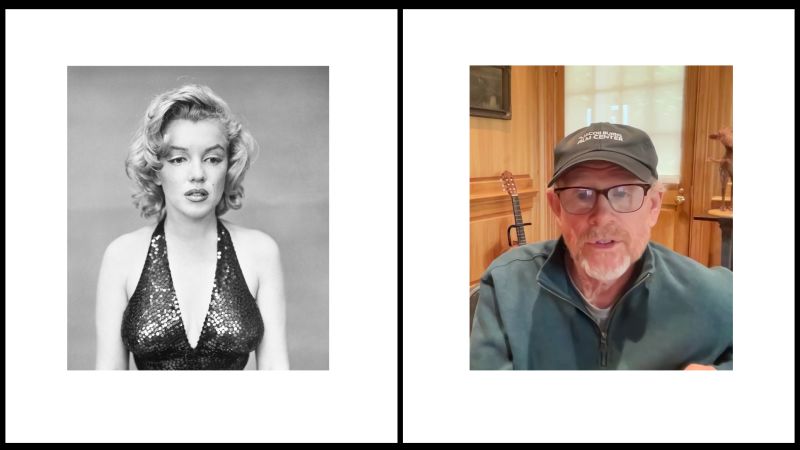
- Ron Howard’s documentary Avedon premiered at the Cannes Film Festival on May 17, 2026
- The film chronicles how photographer Richard Avedon reshaped visual culture from fashion to civil rights to fine art
- Interviews include Lauren Hutton, Isabella Rossellini, Twyla Tharp, Calvin Klein, Tina Brown, and Avedon’s son John
- The doc draws on archival interviews with Avedon himself, who died in 2004 at age 81
- The Richard Avedon Foundation co-produced the film, raising questions about what the portrait leaves out
You’ve seen his photos your whole life without knowing it. Marilyn Monroe staring off-camera, utterly deflated. Charlie Chaplin flashing devil horns. Brooke Shields in that Calvin Klein ad. For Ron Howard, making Avedon — his new documentary that premiered at the Cannes Film Festival on May 17 — meant walking through decades of images he’d absorbed without ever registering the name behind them. “It was stunning,” Howard said of going into the archive and seeing the sheer range of who had sat for Richard Avedon. “He’s braver. He took more leaps, took more risks.”
In the second half of the 20th century, if you mattered in American culture — Hollywood icons, presidents, revolutionaries, supermodels — Avedon had photographed you. Against his signature stark white backdrop, he had an almost uncanny ability to peel away the performance and find the person underneath. Howard’s film, produced through his and Brian Grazer’s Imagine Documentaries banner with co-production from the Richard Avedon Foundation, sets out to do for Avedon what Avedon did for everyone else: find the real thing beneath the image.
Whether it fully succeeds is another question. But as a portrait of an extraordinary creative life, it’s a genuinely absorbing watch.
The Man Who Could Make Anyone Real
Avedon “wasn’t technical,” as one former studio assistant puts it in the film. His genius was relational — developing rapport, reading personality, knowing exactly when to press the shutter. Howard found a kindred spirit in that approach. “For him, every photo sitting was like creating a scene,” Howard said. “He knew how to be commercial and in-demand in the magazine and advertising world, and yet simultaneously push boundaries, take chances and create. He’s just a fantastic case study that you can be commercial and not a sellout.”
The documentary is packed with faces: Isabella Rossellini, Lauren Hutton, Twiggy, Calvin Klein, Tina Brown, Beverly Johnson, dancer and choreographer Twyla Tharp, and Avedon’s son John all sat for new interviews. Art dealer Larry Gagosian shows up too, offering one of the film’s most revealing moments — describing Avedon’s Dovima with Elephants as “one of his most iconic images, and one of the most valuable photographs he made; I think we sold one for $2m.” He also recalls going to Avedon’s home for brunch and being served hardboiled eggs and champagne. “I thought it was super elegant,” Gagosian says with a chuckle.
Howard particularly loved interviewing Tharp, who had been both a subject and close friend of Avedon’s. “She offered a lot of insight, and I just love her droll delivery,” Howard said. “She really understood how Avedon could find that balance between images that would provoke or be sexy, funny, sell a product — whatever it was trying to be — and his own sensibility and the spirit that surrounds all of that.”
The film also draws heavily on archival interviews Avedon gave to filmmaker Helen Whitney for the 1996 PBS American Masters documentary Richard Avedon: Darkness and Light — giving the late photographer, who died in 2004, the chance to tell his own story in his own words. In those clips, he’s reflective, self-aware, sometimes raw.
Four Photos That Tell the Whole Story
Howard was asked to choose four favorite Avedon images, and the choices he made essentially map the arc of the documentary.
The first is Charlie Chaplin, September 1952 — one of the most charged photographs in American cultural history, though most people don’t know the story behind it. Chaplin was under fire during the McCarthy era, a target of hostile politicians and right-wing press. Avedon was nervous going in, knowing he had limited time. The formal sitting wasn’t yielding what he wanted. Then, as Avedon recalled in archive footage: “When I was finished, [Chaplin] said, ‘now can I do one for you?’ And he put his head down and he came up frowning furiously with these horns. And then he said, ‘no, no, I want to do it again.’ And he came up smiling.” The next day, Chaplin and his family sailed for London and never came back. Avedon later noted with evident delight that newspapers speculated Chaplin had “hid out in my studio… and it turns out this photograph was his last message to the US.”
Then there’s Marilyn Monroe, May 1957. She had just married Arthur Miller and was actively pushing against her bombshell image. She hired Avedon to shoot her for The Prince and the Showgirl. It was a long day of costumes and movement, and somewhere in the middle of it, Avedon caught Monroe off to the side, lost in thought, unguarded. He didn’t just snap it — he went to her. “This was not an accident,” Howard said. “This is not a moment caught. It’s a moment that he observed. And this is the director in him, the storyteller in him. He went to Marilyn, the brilliant actress, and said ‘I want that moment in front of the paper.’” She agreed. The resulting image is one of the most quietly devastating photographs ever taken of her.
The third image marks a turn. It’s Lew Alcindor — before the world knew him as Kareem Abdul-Jabbar — photographed in 1963 on a New York street corner, not in Avedon’s white-walled studio. Howard sees it as the moment Avedon started choosing meaning over money. “At the peak of his earning power, as he’s really becoming damn-near a household name, and certainly a superstar in the magazine world, the fashion world, and the world of photography, he chooses these projects,” Howard said. “Every hour that he’s shooting young Lew Alcindor out here, is an hour where he’s not shooting Marilyn Monroe or a magazine cover.” John Avedon remembered his father coming home from a civil rights photography project completely transformed. “I had never seen him like that.”
The fourth is the most personal. From the late 1960s until his father Jacob’s death in 1973, Avedon regularly traveled to Sarasota, Florida to photograph him — a man he’d barely known growing up. Over time, his father opened up, allowed himself to be captured at his most frail as cancer took hold. “Photographing my father wasn’t just photographing my father,” Avedon said in the documentary. “It was photographing who we really were, without the sense of artifice.” He described a childhood in Manhattan where the family would sometimes borrow other people’s dogs to complete a happy family photo. “The sadness of borrowed dogs,” he said. “We were not satisfied with the way we were.” Coming to truly know his father in those final years, he said, was “one of the happiest things in my life.”
The Portrait Has Edges the Film Softens
Howard is a natural fit for this material — he’s spent decades wrangling celebrities and coaxing out their humanity, from his own acting career through films like A Beautiful Mind and a string of high-profile documentaries including his Pavarotti film and the Carlos Santana doc. He never ran in Avedon’s fashion circles, he jokes, so he’s admired the work from afar. “I really wish I could have known him. I would have really liked him,” Howard said.
But the film’s co-production with the Richard Avedon Foundation does leave some marks. Norma Stevens, Avedon’s former studio manager, described him as bisexual in her 2017 biography Something Personal — a book the Foundation vigorously contested, including executives who appear prominently in this documentary. The film doesn’t directly address the bisexuality question. It also, curiously, shows Avedon’s series on Andy Warhol’s Factory onscreen without any comment on his groundbreaking mirror-image nude of Joe Dallesandro and transgender Superstar Candy Darling. And while archival Avedon speaks with evident anguish about the sacrifices his marriage required, the film stays vague about the specifics of what those sacrifices were.
The Art Newspaper noted that this documentary now functions, in effect, as the Avedon biography of record — which makes what it chooses not to say as interesting as what it does.
None of that diminishes what the film gets right. Via Avedon’s career, Howard traces the entire arc of photography’s rise — from enlivening postwar fashion pages at Harper’s Bazaar to helping launch early supermodels like Twiggy and Hutton, to the moment when Tina Brown brought him to The New Yorker as its first-ever staff photographer and his black-and-white portraits of everyone from Barack Obama to Cat Power became a kind of cultural shorthand for a new era that didn’t separate high and low culture anymore.
One discovery Howard hadn’t anticipated: a portrait of director John Ford, whom Howard grew up idolizing. “That’s my favorite photo of him,” Howard said, “and I had no idea Richard Avedon had taken it.”
Howard said he found editing the film down to a watchable length genuinely painful. “It was so hard to edit this down into a playable length. There were so many more photographs and anecdotes.” What made it worth the struggle was realizing the film had become something more than a career retrospective. “It wound up being this kind of object lesson in a creative life,” he said. “I hope my portrait of him… is as revealing as many of the great portraits that he was able to give us.”
Filed in

Comments
0