
Ron Howard’s ‘Avedon’ Doc Premieres at Cannes
Ron Howard’s documentary on legendary photographer Richard Avedon just premiered at Cannes — and it’s already turning heads with its intimate, surprising portrait.
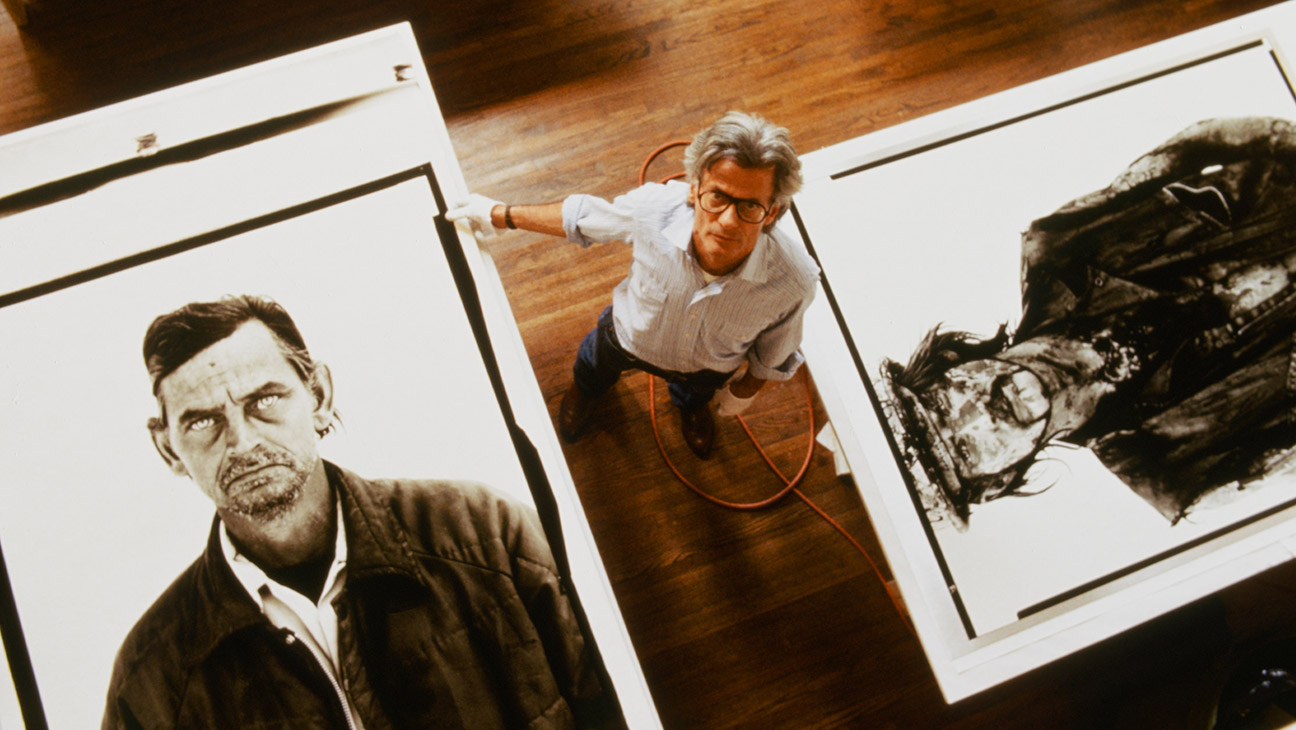
- Ron Howard’s documentary Avedon premiered at the 2026 Cannes Film Festival and is currently seeking U.S. distribution.
- The film draws on archive footage, recordings Avedon made of his own sessions, and new interviews with Lauren Hutton, Isabella Rossellini, Twiggy, Tina Brown, and others.
- Howard says making the film became “an object lesson in creative endurance” — and an unexpected source of personal inspiration.
- The documentary is an Imagine Documentaries production, the nonfiction division of Imagine Entertainment headed by Sara Bernstein.
- Avedon’s son John appears in the film, offering a rarely seen look at the man behind the lens.
Richard Avedon never needed to be in front of the camera. He had the looks for it — movie-star handsome, impeccably composed — but he spent a lifetime on the other side, pulling the truest versions of people out from behind their own carefully constructed surfaces. Marilyn Monroe. Charlie Chaplin. A teenage Lew Alcindor, years before the world knew him as Kareem Abdul-Jabbar. Brooke Shields in those Calvin Klein jeans. The Reagans, who apparently didn’t love what they saw. Now, 22 years after his death, Avedon himself is the subject — and Ron Howard is the one holding the camera.
Avedon, Howard’s documentary simply titled after the man, premiered at the Cannes Film Festival over the weekend to strong notices. The film runs 100 minutes and makes a compelling case that Avedon — who shot everything from Dior runway shows to napalm victims in Vietnam — captured the arc of an entire American century. It is currently seeking U.S. distribution.
“It was stunning,” Howard said of going into the archive for the first time and seeing the sheer range of subjects who had sat for Avedon. “You could open up every drawer and your head explodes.” Speaking via video call, trademark cap firmly in place, Howard admitted he came into the project with only a general reverence for the name — a handful of images he could consciously attribute to Avedon, but no real sense of the depth. What he found changed that quickly.
The Man Who Turned Fashion Photography Into Something Else Entirely
Avedon was 21 when he joined Harper’s Bazaar, where he stayed for 20 years before following fashion editor Diana Vreeland to Vogue. When Tina Brown took over The New Yorker and blew up its long-standing no-photographs policy, she hired Avedon as its first-ever staff photographer. His career, which spanned more than six decades, essentially invented the idea that a fashion photograph could have a soul.
He did it, at first, by making his models move. In an era of posed mannequins and stiff studio formality, Avedon would leap and dance alongside his subjects, coaxing motion out of a still image. When Harper’s sent him to Paris in 1947 to capture some of the city’s battered postwar glamour, he turned to cinema for inspiration — shooting Dior’s voluminous new skirts mid-twirl in ways that made people weep at the shows. It was fashion photography as emotional release, and it changed everything. It’s no coincidence that when Hollywood made a romantic musical loosely inspired by his life and first marriage — Funny Face — the photographer was played by Fred Astaire.
Later, he shifted to an 8×10 large-format camera that let him engage directly with subjects rather than through a viewfinder. He placed them against stark white backgrounds, stripped away flattering light, and simply waited. “Beautiful lighting I always find offensive,” he once said. He was after something harder to manufacture: the moment the ego lets its guard down. The moment the mask slips.
“He was a director,” Howard said. “That’s one of the things I learned in making the documentary — he’s not taking snapshots, he’s creating scenes.”
Four Images That Tell the Whole Story
Howard walked through four photographs that, for him, crystallize what made Avedon singular.
The first is Charlie Chaplin, September 1952. Chaplin was under fire from McCarthyite politicians, had never become a U.S. citizen despite decades in America, and was about to sail for London and never come back. Avedon, nervous, knowing he had limited time, got through the formal sitting feeling like he hadn’t captured the real man. Then Chaplin asked if he could do one for Avedon — and put his fingers up behind his head like devil horns, grinning. The next morning he was gone. That photograph, it turned out, was Chaplin’s last message to the United States. “He only had one crack at this,” Howard said. “And look, it’s sharp, his eyes are perfect. Those two nailed it in this moment.”
The second is Marilyn Monroe, May 1957. She’d recently married Arthur Miller and was actively resisting her bombshell image. She hired Avedon to shoot her for The Prince and the Showgirl. It was a long day — costumes, movement, energy. Late in the session, Avedon spotted Monroe standing off to one side, lost in thought, expression dropped and deflated. He didn’t just click the shutter. He went to her and asked her to bring that exact moment in front of the camera. She did. “This was not an accident,” Howard said. “This is not a moment caught. It’s a moment that he observed. And this is the director in him, the storyteller in him.”
The third is a young Lew Alcindor on a New York City playground, 1963 — shot not in Avedon’s white-backdrop studio but on the kid’s own turf. “You have a feeling about somebody facing their destiny,” Howard said. The image marks a turning point in Avedon’s career, when he began pulling away from fashion work to document the civil rights movement, Vietnam, and the corners of American life that magazine editors didn’t particularly want him photographing. “Every hour that he’s shooting young Lew Alcindor out here, is an hour where he’s not shooting Marilyn Monroe or a magazine cover,” Howard noted. Avedon’s son John, who appears in the documentary, remembers his father coming home from a civil rights photography project completely electrified: “I had never seen him like that.”
The fourth is the most intimate. Beginning in the late 1960s, Avedon began making regular trips to Sarasota, Florida, to photograph his elderly father — a man he hadn’t been close to for most of his life. “I realized there was a 76-year-old man living in Florida that I didn’t know,” Avedon recalled in archival footage used in the film. “And I had to, for the sake of my son and myself, find out who this parent was.” He continued the portraits until his father’s death from cancer in 1973, capturing him at his most frail and unguarded. Avedon grew up in a Manhattan household where the family sometimes borrowed other people’s dogs for photographs — just to complete the illusion of domestic happiness. “The sadness of borrowed dogs,” he said. “We were not satisfied with the way we were.” Knowing his father in his last years, he said, was “one of the happiest things in my life.”
An Object Lesson in Creative Endurance
What Howard didn’t expect, going in, was how personally the story would hit him. “I wound up being really emotionally connected to Avedon,” he said. “I’m not anything like him, outside of the fact that I love to work and I have a lot of energy around it.” The comparison he kept coming back to was not photographic but human — Avedon reminded him of certain mentors from his own early career, people who were the center of every room they walked into, funny at all times, genuinely in love with people.
What moved Howard most was Avedon’s willingness to sacrifice commercial safety for creative conviction. At the peak of his earning power, he was documenting civil rights marches and war zones. His landmark book In the American West — five years spent photographing coal miners, waitresses, drifters, and ranchers against his signature white backdrop — was savaged by critics who called it elitist. “Scathing reviews that hurt him,” Howard said. “But he carried on.” A New York Times review of an earlier show was so brutal that Avedon reportedly didn’t go back to work for a year. “He courageously defined himself as this person who was not going to stay in one lane.”
The documentary also highlights a moment that speaks to Avedon’s moral commitments as clearly as anything: in 1959, he threatened to sever his contract with Harper’s Bazaar unless the magazine published his photographs of model China Machado. He won. She became the first model of color to appear in the editorial pages of a major American fashion magazine.
The film, made in association with the Richard Avedon Foundation, includes interviews with models Lauren Hutton, Isabella Rossellini, Twiggy Lawson, Penelope Tree, and Beverly Johnson, as well as writers Adam Gopnik, John Lahr, and Hilton Als, and New Yorker editor Tina Brown — who offers what the Hollywood Reporter calls a “trenchant anecdote” about the power dynamic Avedon maintained with his subjects. Art dealer Larry Gagosian, meanwhile, remembers showing up for brunch at Avedon’s home and being served hardboiled eggs and champagne. “I thought it was super elegant,” he said.
Howard, who has directed seven nonfiction films since 2016 — more than his six narrative features in that same period — frames Avedon as something beyond a career retrospective. “It wound up being this kind of object lesson in a creative life,” he said. The documentary is organized around artistry rather than biography, letting Avedon’s own voice carry much of the film through archival recordings he made of his sessions, as well as past interviews assembled into a first-person narration.
What Comes Next for Imagine Documentaries
Avedon is the latest from Imagine Documentaries, the nonfiction division of Imagine Entertainment that Sara Bernstein has led since its founding in 2018. The unit has become arguably the most consistently successful production company in the documentary space, with films premiering on Netflix, Apple TV+, Prime Video, Disney+, Hulu, and National Geographic. Howard’s Jim Henson: Idea Man won five Primetime Emmys. Laurent Bouzereau’s Music by John Williams won both a Primetime Emmy and a Grammy. Amy Poehler’s Lucy and Desi won two Emmys. The track record is hard to argue with.
Bernstein says the company is increasingly financing its own projects — including Avedon, the recent Martin Short documentary Marty, Life Is Short directed by Lawrence Kasdan, and an upcoming Whoopi Goldberg documentary to be directed by Oscar nominee Geeta Gandbhir. Also in the pipeline: Amelia, about aviation pioneer Amelia Earhart, from Oscar nominees Betsy West and Julie Cohen (the team behind RBG and Julia); and Keys of Life, directed by Joachim Rønning, about the 100-year-old piano used to record the Beatles’ “Hey Jude,” Carly Simon’s “You’re So Vain,” and David Bowie’s “Life on Mars.” Rory Kennedy is also following up her Boeing documentary Downfall with a new investigative project for the company.
“Part of the Imagine DNA, it starts with the curiosity of subjects,” Bernstein said. “We really want them to feel like they had a riveting viewing experience throughout that process.”
As for Avedon itself — a film about a man who spent 60 years finding the truth inside the image — Howard’s closing hope feels exactly right. “I hope my portrait of him,” he said, “is as revealing as many of the great portraits that he was able to give us.”
Filed in

Comments
0