
Jon Favreau on Why Baby Yoda Is Bringing Star Wars Back
Jon Favreau admits he’s not sure why The Mandalorian and Grogu was chosen to end Star Wars’ 7-year theatrical drought — but suspects Grogu had everything to do with it.
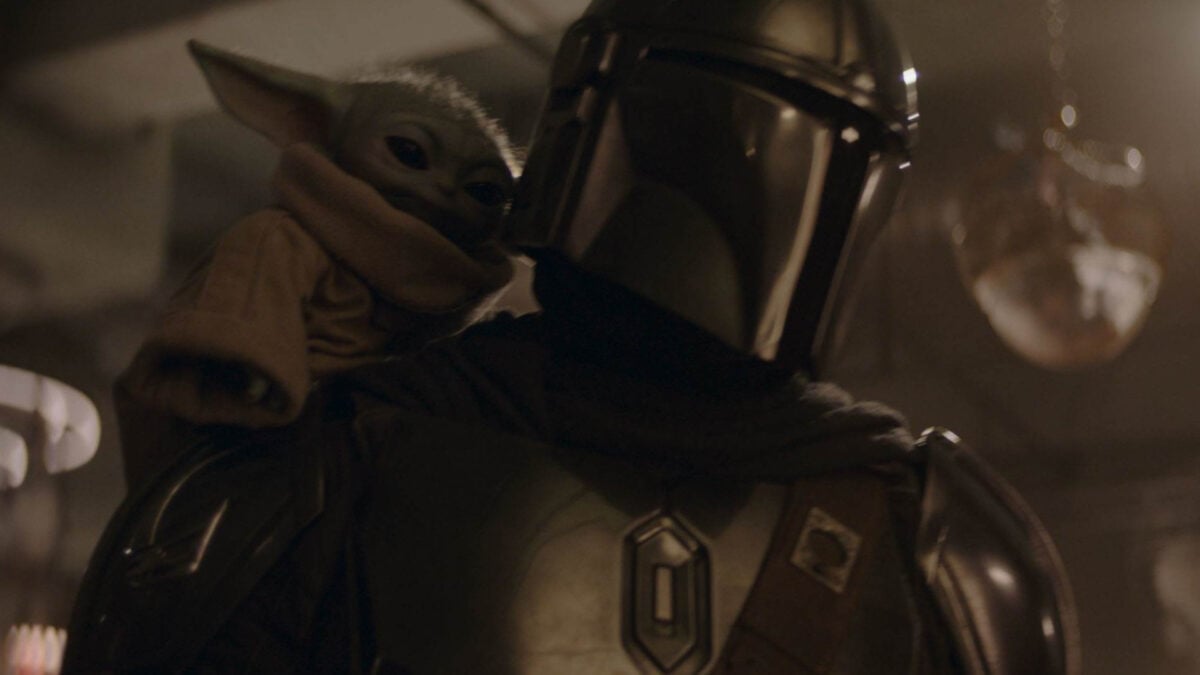
- Jon Favreau says he’s not entirely sure why The Mandalorian and Grogu was chosen as the first Star Wars film in seven years
- He believes Grogu’s massive cultural footprint — “Baby Yoda was everywhere” — is a major factor
- Favreau sees the film as an opportunity to bring Star Wars to a whole new audience
- Co-star Jonny Coyne reveals Grogu’s puppeteers stay in character even between takes, channeling the Muppets tradition
- The Mandalorian and Grogu opens in theaters May 22
Seven years is a long time to wait for Star Wars on the big screen. And of all the projects that Lucasfilm has teased, announced, and quietly shelved over that stretch, the one that actually made it to theaters turned out to be something nobody quite saw coming — a movie built around a TV bounty hunter and a tiny green creature that broke the internet in 2019. Jon Favreau, the man directing The Mandalorian and Grogu, is still a little surprised himself.
“I’m not sure what, exactly, why we were asked to do this,” Favreau told GamesRadar in London. “I suspect it was because these are characters that people, even who hadn’t seen Star Wars, may be aware of, especially Grogu. Baby Yoda was everywhere.”
He’s not wrong. When The Mandalorian launched Disney+ back in November 2019, it was Grogu — then nicknamed Baby Yoda by a delighted internet — who became the show’s breakout star almost overnight. The memes, the merch, the cultural saturation: it was one of those rare pop culture moments where something genuinely transcended its fandom. And Favreau clearly believes that crossover power is exactly what Star Wars needs right now to recapture casual audiences.
“These are two characters that were used to launch Disney Plus, and we made no assumptions when the Mandalorian TV show came on that anybody had seen any Star Wars before,” he explained. “But we also wanted to make it feel authentic to Star Wars, and so the world that we created as the backdrop and the way the characters present themselves were embraced by Star Wars fans, which I really appreciate. But it also was an inroad for people who may not have ever watched Star Wars on television, and here we are now, seven years after the last film. I think there’s an opportunity to present Star Wars to a new audience using these characters as well.”
The Weight of Bringing Star Wars Back to Theaters
This isn’t Favreau’s first time carrying the weight of a beloved franchise. He kicked off the entire Marvel Cinematic Universe with 2008’s Iron Man, a film that nobody was entirely sure would work and that changed Hollywood permanently. Now he’s in a roughly analogous position with Star Wars, and the pressure isn’t lost on him.
“I felt definitely responsibility, but more so to tell as good of a story as I could,” he said. “I find that, as a Star Wars fan myself, and across multiple genres that have strong fan bases, they really are invested in the story being good, and they want a great experience. And if you could deliver that to them, they reward you, but they want to make sure that you care as much as they do.”
That care, he says, shows up in the details — including some genuinely old-school filmmaking choices. Favreau mentioned bringing in Phil Tippett for stop-motion animation and John Goodson for miniature work, the kind of practical craft callbacks that Star Wars fans tend to go wild for. “We’re doing that because we’re excited by it, it’s fun for us,” he said, “and I think the story that surrounds the making of it is as much a part of the story as what you see on the screen.”
He also spoke to how deliberately the film is structured to work on two levels — accessible to first-timers, rewarding for diehards. “Star Wars fans are very perceptive, and so you can be very subtle in the messages that you send,” he said. “Part of the Star Wars community is that they communicate among one another. There’s a lot of speculation. There’s a lot of filling in the blanks for one another. So, you don’t have to lay everything out deliberately in a way that’s overly obvious.”
On Set, Grogu Never Really Clocks Out
One of the film’s co-stars, Jonny Coyne — who plays the mysterious Lord Janu and is known for his work on The Blacklist — stayed tight-lipped about plot details when speaking to CinemaBlend, but he had plenty to say about what it’s actually like sharing a set with Grogu. And it turns out the puppeteers behind the character bring a level of commitment that would impress even the most dedicated Muppets performer.
Coyne described how the team operating Grogu stays in character between takes — keeping the little guy “alive” even when the cameras aren’t rolling. It’s a philosophy straight out of the Jim Henson playbook, and it’s not entirely a coincidence. Yoda, Grogu’s species-mate and spiritual predecessor, was originally voiced and co-performed by Frank Oz, the legend behind Miss Piggy, Fozzie Bear, and Animal. The Henson Company’s DNA runs deep in this corner of the galaxy.
Coyne also noted that unlike actual babies (unpredictable, often uncooperative) or animals (famously difficult on set), Grogu manages to be the best of both — small, cute, and always ready for his close-up. “Babies can be whiny, fussy, hungry,” the logic goes, but a 50-year-old creature who looks like an infant? Apparently that’s the sweet spot.
It’s a small behind-the-scenes detail, but it says something about the care being put into this production — the same care Favreau keeps coming back to when he talks about what makes Star Wars fans tick.
The Mandalorian and Grogu opens in theaters May 22.
Filed in

Comments
0